About DuMonde
We inhabit the same continent. We no longer inhabit the same present.
The European informational space has fragmented to the point where two people on the same street can be living incompatible realities, sustained by different algorithms and fuelled by economic incentives neither of them chose. DuMonde Lab exists to investigate that fragmentation, make it visible, and give European institutions the tools to respond to it without reproducing it.
What follows is the closest thing to a manifesto we will publish: what DuMonde does, where it comes from, where it is going.
Origin
DuMonde Lab was born one night during my thesis research, in the middle of the Cambridge Analytica investigation. I had opened too many threads for a single piece of academic work, and most of them did not fit the doctrinal frame I had to submit. But all of them pointed to the same thing: we were not seeing what was happening to the European informational space, and the institutional response was running years behind the phenomenon.
I had been watching for some time how social platforms appeared and grew, how patterns of digital behaviour consolidated, how the public sphere fragmented into overlapping realities. And, in parallel, I was living — and still live — a rich life away from screens, with people, places and conversations that almost never showed up in the digital versions of the world circulating around me.
That gap became sharper when I looked at what was close. The people we choose and the people we inherit no longer share the same present. The first tend to resemble us more than is wise; the second, increasingly, speak from realities we can no longer share.
The most brutal distance between two visions of Europe is not between Madrid and Berlin. It is between two neighbours on the same landing.
DuMonde Lab was born of that observation, and of the suspicion that the problem calls for new lenses — not just more fact-checking, not just more regulation, not just more media literacy. It calls for patient work on the psychological, algorithmic and geopolitical mechanisms that produce fragmentation, and on the institutional tools that can respond to them without reproducing them.
Why the name DuMonde
The name has been with me for ten years. It started as something else — an early-stage project that aimed to align corporate behaviour with the Sustainable Development Goals — and gradually shifted until it found its current form. But it has always carried the same underlying motivation: we all inhabit the same world.
We are all human. We have differences, yes, but above all we have similarities. DuMonde — of the world — is the explicit opposite of the primary differentiating act, that founding political gesture of dividing between friend and enemy. I find myself far more connected to a proverb of the desert:
Today's stranger may be tomorrow's saviour.
The project is conceived as a space to democratise knowledge, to foster joint work, to cooperate and teach one another. A form of soft power that does not come from any state, but from civic capacity and from the most ancestral tool that has driven human societies forward: the ability to cooperate.
It is, in other words, the most diplomatic thing I have to offer the world in favour of peace.
What we mean by cognitive sovereignty
Cognitive sovereignty is not a slogan. It is a capacity: the capacity of an individual, a community or an institution to form, sustain and revise their beliefs under conditions designed to capture their attention and steer their emotions. The loss of that capacity — collective, not individual — is what is reorganising the European political map today.
In practice, working on cognitive sovereignty means three things:
Making mechanisms visible. Naming with precision the algorithmic, psychological and narrative techniques that structure the informational space. What is not named cannot be regulated.
Building lenses. Offering operational tools, not only conceptual ones, so that journalists, institutions and citizens can see what normally falls outside their visual field.
Training responses. Turning diagnosis into institutional practice, professional training and active critical citizenship.
We do not defend free minds in the abstract. We defend the institutional and cultural conditions in which public deliberation is actually possible.
The model · Understand · See · Act
The work is organised in three connected lines, not in silos.
Understand — applied research. Master's thesis on digital nationalism and the fragmentation of European identity. Two notes published with the IEGA on preventive psychosocial diplomacy. Ongoing contribution to the Atlas stratégique des armées françaises 2026 on cognitive defence. Working papers in preparation. All open-access, in three languages.
See — operational tools. Bubble Lens, an algorithmic filter-bubble simulator. Buzón de Escucha, a political listening platform. Disinfo Watch, a real-time IFCN fact-check aggregator. What research names, the tools make verifiable.
Act — training and institutional consultancy. Emotional-governance audits. Applied workshops on affective polarisation. Tailored programmes for ministries, regulatory bodies and newsrooms.
The three lines hold each other up. Without research, tools would be improvisation. Without tools, research would be literature. Without training, all of it would be analysis without a recipient.
Method · How we work
Four practical commitments structure every product that comes out of DuMonde:
Cite or Die. No claim reaches the reader without a verifiable source. Same standard for internal communication and public publications.
Three languages, not translated. Every substantive document is composed in Spanish, French and English with its own voice in each language. The fragmentation of the European informational space is multilingual; the analysis has to be too.
Closed pipeline: research → tools → training. We do not publish research without eventual translation into a tool or training programme. We do not design tools without research anchoring. The chain does not break.
Financial and editorial independence. DuMonde Lab does not accept funding that compromises its freedom to publish. Any institutional collaboration is under public contract.
Intellectual lineage
DuMonde is not an original idea. It is a reorganisation of classical theories read through a specific lens: peaceful, cooperative, and — above all — feminine.
The lineage is organised across six thematic territories: identity and social psychology · political emotion · narrative and discursive power · technology and surveillance · cooperation and governance · ethics of care and resistance. The constellation below brings together the foundational core. The extended directory holds the complete genealogy.
The eighteen thinkers at the core
Identity and social psychology
- Henri Tajfel★1919–1982 — Social identity theory. The psychological construction of 'us' and 'them' as a mechanism of simultaneous cohesion and exclusion. An explicit exception to a primarily feminine lineage, retained for conceptual centrality.
- Elisabeth Noelle-Neumann1916–2010 — The spiral of silence. How perception of the opinion climate silences minority voices even before they are uttered.
- Arlie Russell Hochschild1940– — Political emotions and identity narratives. *Strangers in Their Own Land*: how emotional loss structures voting and political belonging.
Political emotion
- Martha Nussbaum1947– — Political emotions as democratic infrastructure, not as noise to be contained. The capabilities approach and global justice.
- Sara Ahmed1969– — The cultural politics of emotion. The affective economies that sustain — and wear down — the public sphere. The direct theoretical base for what we call at DuMonde emotional governance.
- Carol Gilligan1936– — *In a Different Voice*. Relational morality and the ethics of care in moral psychology. Another way of reasoning about the just.
Narrative and discursive power
- Hannah Arendt1906–1975 — The banality of evil. The human condition. The public sphere as the place where human plurality manifests and sustains itself.
- Chimamanda Ngozi Adichie1977– — The danger of a single story. How one imposed narrative impoverishes political understanding — narrative DNA of DuMonde's work.
- Maria Ressa1963– — Disinformation, platforms and democracy. Investigative journalism in the face of coordinated informational operations. Nobel Peace Prize 2021.
Technology and surveillance
- Shoshana Zuboff1951– — Surveillance capitalism. How massive behavioural data extraction reorganises political and economic power.
- Zeynep Tufekci1971– — *Twitter and Tear Gas*. Digital protest and algorithmic architecture. How platforms simultaneously enable and constrain collective action.
- Kate Crawford1969– — *Atlas of AI*. AI as an extractive system: minerals, data, invisible labour. Material genealogy of the algorithm.
Cooperation and governance
- Elinor Ostrom1933–2012 — Cooperative governance of the commons. Nobel Prize in Economics 2009. How communities self-organise resources without state or market.
- Susan Strange1923–1998 — Structural global power. *Casino Capitalism*, *The Retreat of the State*. Pioneer of international political economy, systematically under-cited.
- Wendy Brown1955– — Liberal democracy under neoliberal logic. The dismantling of the demos as a political subject and the silent transformation of citizens into consumers.
Ethics of care and resistance
- Joan Tronto1952– — *Caring Democracy*. The ethics of care as democratic political theory. Care is not sentimental periphery; it is political substrate.
- Simone Weil1909–1943 — Attention as an ethical faculty. *Gravity and Grace*. Thinking the suffering of the other as the starting point of political thought.
- Kasturba Gandhi1869–1944 — The historic commitment to unarmed struggle that official historiography attributed to a single name — and which was in fact carried by many hands, many strategies, many patient intelligences.
Adjacent sensibility
Also part of this tradition is the work of Audrey Tang (non-binary) on radical transparency and plural digital democracy — a sensibility politically close to the feminine lineage that sustains this project. We place Tang here in their own coordinate so as not to clumsily resolve a category that is not theirs.
Complementary technical framework
Alongside everything above sits a more technical tradition of research on digital polarisation, disinformation and the network society: Benedict Anderson, Joseph Nye, Sander van der Linden, Manuel Castells and Siva Vaidhyanathan.
Identity and social psychology
- Henri Tajfel★1919–1982In the constellation
Social identity theory. The psychological construction of 'us' and 'them' as a mechanism of simultaneous cohesion and exclusion. An explicit exception to a primarily feminine lineage, retained for conceptual centrality.
- Elisabeth Noelle-Neumann1916–2010In the constellation
The spiral of silence. How perception of the opinion climate silences minority voices even before they are uttered.
- Arlie Russell Hochschild1940–In the constellation
Political emotions and identity narratives. *Strangers in Their Own Land*: how emotional loss structures voting and political belonging.
Political emotion
- Martha Nussbaum1947–In the constellation
Political emotions as democratic infrastructure, not as noise to be contained. The capabilities approach and global justice.
- Sara Ahmed1969–In the constellation
The cultural politics of emotion. The affective economies that sustain — and wear down — the public sphere. The direct theoretical base for what we call at DuMonde emotional governance.
- Carol Gilligan1936–In the constellation
*In a Different Voice*. Relational morality and the ethics of care in moral psychology. Another way of reasoning about the just.
Narrative and discursive power
- Hannah Arendt1906–1975In the constellation
The banality of evil. The human condition. The public sphere as the place where human plurality manifests and sustains itself.
- Chimamanda Ngozi Adichie1977–In the constellation
The danger of a single story. How one imposed narrative impoverishes political understanding — narrative DNA of DuMonde's work.
- Maria Ressa1963–In the constellation
Disinformation, platforms and democracy. Investigative journalism in the face of coordinated informational operations. Nobel Peace Prize 2021.
Technology and surveillance
- Shoshana Zuboff1951–In the constellation
Surveillance capitalism. How massive behavioural data extraction reorganises political and economic power.
- Zeynep Tufekci1971–In the constellation
*Twitter and Tear Gas*. Digital protest and algorithmic architecture. How platforms simultaneously enable and constrain collective action.
- Kate Crawford1969–In the constellation
*Atlas of AI*. AI as an extractive system: minerals, data, invisible labour. Material genealogy of the algorithm.
Cooperation and governance
- Elinor Ostrom1933–2012In the constellation
Cooperative governance of the commons. Nobel Prize in Economics 2009. How communities self-organise resources without state or market.
- Susan Strange1923–1998In the constellation
Structural global power. *Casino Capitalism*, *The Retreat of the State*. Pioneer of international political economy, systematically under-cited.
- Wendy Brown1955–In the constellation
Liberal democracy under neoliberal logic. The dismantling of the demos as a political subject and the silent transformation of citizens into consumers.
Ethics of care and resistance
- Joan Tronto1952–In the constellation
*Caring Democracy*. The ethics of care as democratic political theory. Care is not sentimental periphery; it is political substrate.
- Simone Weil1909–1943In the constellation
Attention as an ethical faculty. *Gravity and Grace*. Thinking the suffering of the other as the starting point of political thought.
- Kasturba Gandhi1869–1944In the constellation
The historic commitment to unarmed struggle that official historiography attributed to a single name — and which was in fact carried by many hands, many strategies, many patient intelligences.
Naming these references is not ornamental. It is honestly signalling the genealogy. And, above all, it is acknowledging that the bulk of the thinking DuMonde draws on was done by women whose names have circulated less than they should have.
Who leads the project
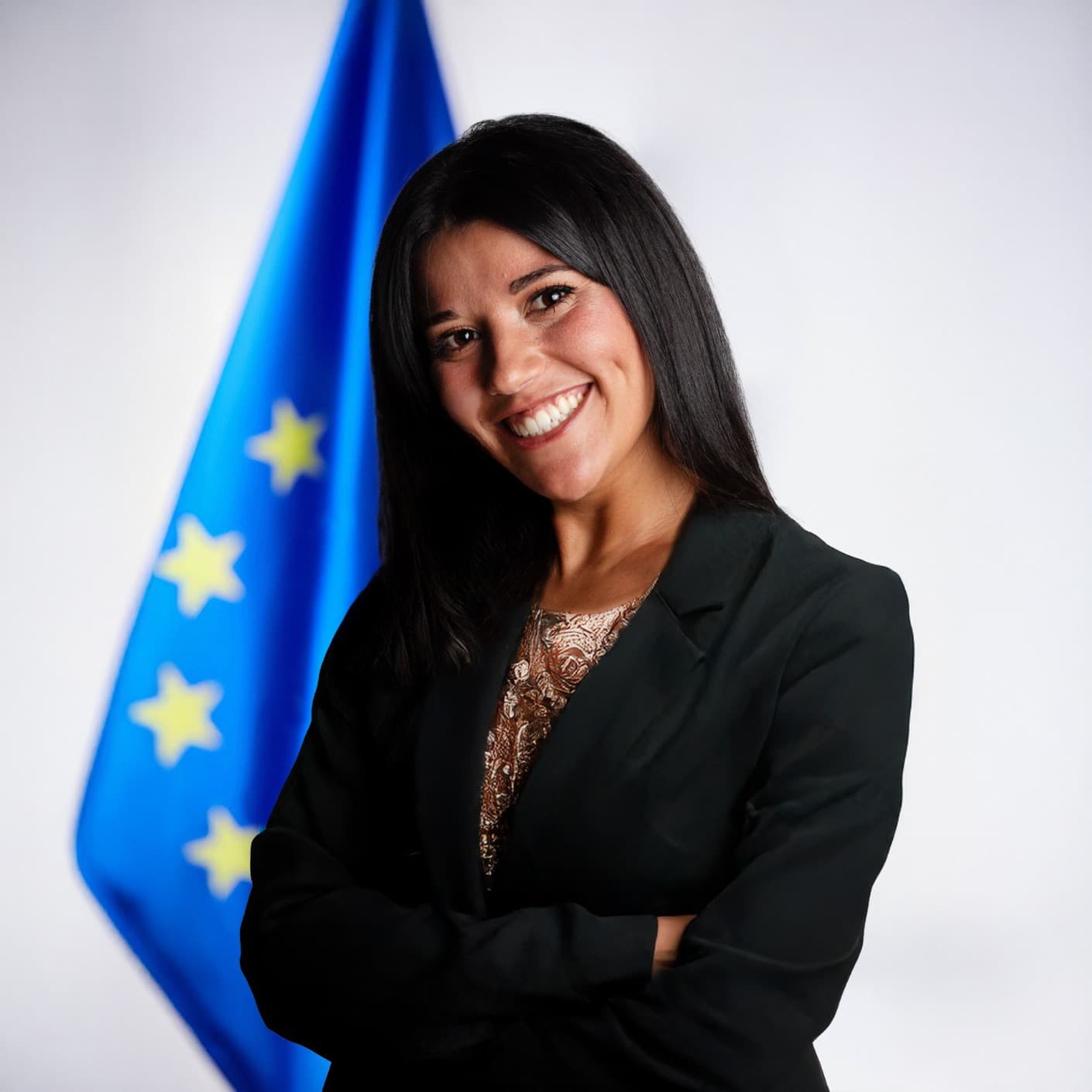
Laura de la Vega
Researcher trained in psychology (UNED) with prior experience in digital nationalism, affective polarisation and European geopolitics. Author of the master's thesis Digital Nationalism and the Fragmentation of European Identity (2026). Co-author of two IEGA notes. Contributor to the Atlas stratégique des armées françaises 2026 (DGRIS / IEGA).
By personal trajectory: a life built across several continents and several languages. A way of thinking shaped by displacement. Curiosity as method. Humility as starting point.
I am not seeking to be the public face of DuMonde. I am seeking to be the bridge — between traditions of thought, between institutions that do not speak to one another, between communities that no longer share the same informational reality.
Values
Rigour. Every claim in a DuMonde publication is backed by an accessible source. Every methodology declares its limitations explicitly in the document itself.
Transparency. Tools, data and methodologies verifiable by third parties. Code under open licence. Funding sources publicly documented.
Ethics. Data obtained with explicit consent or from genuinely public sources. Where there is doubt, we document and consult.
Traceability. Every document can be cited precisely: author, date, version, changes. No content published without verifiable attribution.
Where we are going
Public commitments for the current year:
- Closing the contribution to the Atlas stratégique des armées françaises 2026, chapter 2: note on the civil-military cognitive defence gap.
- Publication of two working papers: operational framework for emotional governance and polarisation diagnostic method for institutional contexts.
- Opening of the first cohort of the Fellows Programme.
- Public release of Bubble Lens and Buzón de Escucha.
Five-year ambition: a recognised European reference in the operationalisation of cognitive sovereignty. Recurrent institutional contracts. Active Fellows network across at least seven countries.
This is not a growth plan. It is a working hypothesis.
How to take part
The work that needs doing is too much for any single institution, lab or person to carry alone. Some concrete ways to join:
If you are a researcher.
The Fellows Programme opens applications twice a year: reading groups, closed sessions, collaborative projects. Structured participation, no extraction.
Request an invitation →If you are a journalist.
Disinfo Watch is freely accessible. Advanced versions of Bubble Lens and Buzón de Escucha for interested newsrooms, with documented OSINT integration.
Access the tools →If you work in public policy or regulation.
Emotional-governance audits and training programmes for your context. We work under contract with ministries, regulatory agencies and European administrations.
Institutional contact →If you represent an institution.
Diagnostics of affective polarisation in electoral, crisis or public-communication contexts.
Request a proposal →If you are a curious reader, with no professional label.
Cognitive defence is not a matter for institutional elites — it is active critical citizenship, cultivated in common. You can:
- Subscribe to the monthly newsletter (no advertising, no third parties, one-click unsubscribe).
- Try Bubble Lens and take part in the civic vaccine against informational manipulation.
- Read the publications in open access. Share them. Discuss them.
- Take part in the public forums when open. Or simply read them.
Critical thinking is not a gift. It is a habit. And habits are cultivated in common.
To close
We do not believe cognitive defence is won by chasing false content piece by piece.
We believe it is won by understanding why certain narratives become contagious, and by changing our own way of communicating first. That it is won in the plural, not in the singular. With cooperation, not surveillance. In three languages at once, not in one alone. Slowly, and in writing.
DuMonde Lab is the most diplomatic thing we have to offer the world, in favour of peace.
And you — what do you bring to this project?
If you have read this far, you probably have something to say. A question, a suspicion, a pending collaboration, a critique that deserves an answer. Write to me.
de la Vega, L. (2026). About DuMonde Lab. DuMonde Lab. https://dumonde.lab/en/about